Contents
Prostate health becomes a real concern for most men after 40, and the supplement aisle reflects that. Two compounds keep showing up in both clinical research and consumer products: saw palmetto and beta-sitosterol. Understanding what each one does, and why their combination matters, helps you make a more informed call on supplementation.
What These Compounds Are and Where They Come From
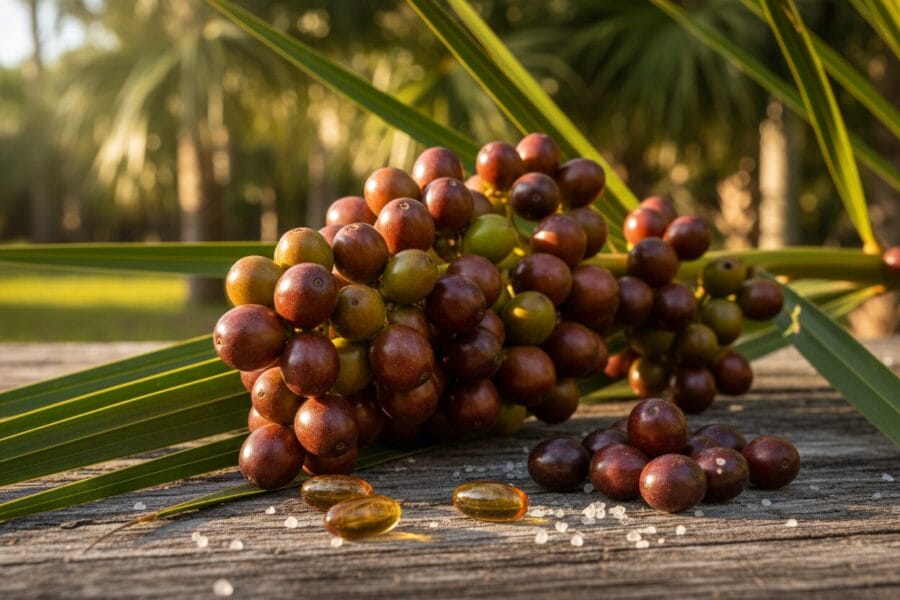
Saw palmetto comes from the berries of Serenoa repens, a small palm native to the southeastern United States. Those berries are a concentrated source of beta-sitosterol, a plant sterol found across many fruits, vegetables, and nuts. As Life Extension’s research team notes, “Serenoa repens berries are a rich source of beta-sitosterol and have been clinically studied to support prostate health.”
Beta-sitosterol is structurally similar to cholesterol, which allows it to interact with hormone-related pathways in the body. It also reduces inflammation and modulates immune function, making it relevant beyond purely hormonal concerns.
How They Work: The Mechanisms Behind the Benefits
Saw palmetto operates through at least two distinct pathways. It inhibits 5-alpha reductase, the enzyme that converts testosterone into dihydrotestosterone (DHT), and DHT is a primary driver of prostate tissue growth. According to Dr. Stanfield’s medical review team, saw palmetto also “induces smooth muscle relaxation in the urinary tract via alpha-1 adrenoceptor binding, and promotes apoptosis in hyperplastic prostate tissue.”
Beta-sitosterol works differently, targeting the inflammatory and immune side of prostate enlargement rather than the hormonal one. Together, these two compounds cover more mechanistic ground than either does alone, which is exactly why combination formulas have drawn research attention.

Clinical Evidence for BPH Symptom Relief
Benign prostatic hyperplasia (BPH) causes urinary frequency, weak flow, urgency, and nighttime bathroom trips. These symptoms are tracked using the International Prostate Symptom Score (IPSS), and both compounds have shown measurable improvements in clinical settings.
Beta-sitosterol trials have reported improvements in urinary flow rate of roughly 35%, a figure that reflects real functional change rather than marginal statistical noise. A double-blind, placebo-controlled randomized comparative study published on PubMed Central found that beta-sitosterol-enriched saw palmetto oil outperformed conventional saw palmetto oil, with the study authors concluding the enriched formulation demonstrates “superior efficacy, thus extending the scope of effective BPH and prostate treatment.”
This matters practically. Not all saw palmetto supplements are equivalent, and products standardized for beta-sitosterol content carry a clinically supported edge over generic extracts.
Emerging Research on Prostate Cancer
This area deserves attention, though it also requires careful framing. UroToday reports that “saw palmetto extract/beta-sitosterol has been shown to promote anti-tumorigenic processes in prostate cancer cells and rodent models of prostate cancer.”
Evidence currently exists at two tiers: cell culture studies and animal models. The UroToday review on beta-sitosterol and prostate cancer summarizes this dual-level evidence, though large-scale human trials are still needed before drawing firm conclusions. This is a promising direction, not a proven therapy.
What to Look For in a Supplement
Most clinical studies use saw palmetto extract standardized to 85-95% fatty acids and sterols, typically at 320 mg per day. Beta-sitosterol doses in BPH trials generally range from 60 to 130 mg daily.
When evaluating a product, these factors matter most:
- Standardized saw palmetto extract, not raw berry powder
- Confirmed beta-sitosterol content listed on the label
- Combination formulas delivering both compounds in clinically relevant amounts
- Third-party testing verification
Real-world feedback from Mayo Clinic Connect supports this approach. One user reported that combining a beta-sitosterol product with saw palmetto was “better for limiting frequent urination and not limiting sex,” which aligns with the favorable tolerability seen in trials. For a closer look at how one combination product holds up against these criteria, our full saw palmetto beta-sitosterol supplement breakdown covers the specifics.
Safety Considerations
Both compounds are generally well-tolerated. The most commonly reported side effects with saw palmetto include mild gastrointestinal discomfort and, less frequently, headache. Anyone on blood thinners or preparing for surgery should check with a physician first, as saw palmetto may affect platelet function.
Beta-sitosterol does not appear to worsen the side effect profile. In combination products, it may actually support better tolerability compared to higher-dose saw palmetto used alone.
The Bottom Line
The clinical case for combining saw palmetto and beta-sitosterol is stronger than for either ingredient on its own. Enriched formulations outperform standard saw palmetto in controlled trials, the mechanisms are complementary rather than overlapping, and the safety profile supports long-term use for most men. For anyone managing BPH symptoms or focused on proactive prostate health, this combination is one of the better-supported options in the supplement category.