Contents
Your brain never stops generating electrical activity, even during deep sleep. That activity organizes into distinct frequency patterns called brainwave states, and understanding them gives you a practical lever for improving focus, creativity, and mental recovery.
The Core Frequency Ranges Explained
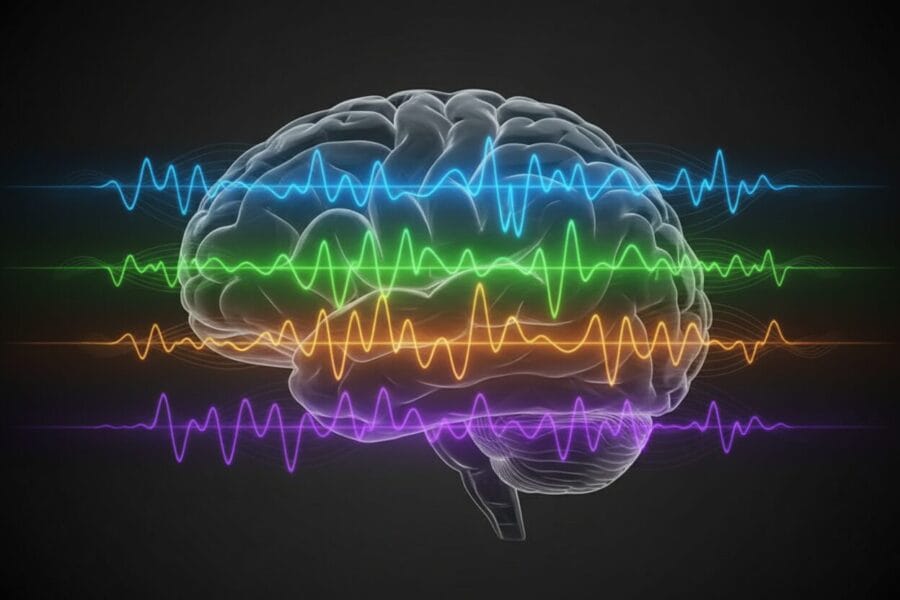
Neuroscientists measure brainwaves in hertz (Hz), representing cycles per second. Rather than toggling between isolated modes, your brain constantly blends these frequencies. The four foundational states break down like this:
- Beta (12–30 Hz): Active thinking, problem-solving, outward attention
- Alpha (8–12 Hz): Relaxed alertness, light meditation, creative readiness
- Theta (4–8 Hz): Deep relaxation, hypnagogia, subconscious access
- Delta (below 4 Hz): Deep sleep, physical restoration
Gamma waves operate above 30 Hz and are associated with peak cognitive binding and moments of sudden insight. These states overlap constantly; your brain blends frequencies rather than switching cleanly between them.
Beta Waves and the Focus Paradox
Beta is the default mode for waking life. As the Center for ADD Arizona’s clinical team puts it, beta waves are present during mental or intellectual activity and outward focus, including problem-solving and active reasoning.
But beta isn’t one-size-fits-all. Low beta (12–15 Hz) supports calm, engaged attention, while high beta (above 20 Hz) tips into anxiety and mental noise that actively undermines focus. This is why grinding harder rarely produces better thinking.
Research from NHA Health identifies 13 Hz, the transition zone between high alpha and low beta, as particularly linked to active intelligence. That specific band is where sharp, engaged thinking tends to live, not the frantic high-beta state most people default to under pressure.
Alpha: The Cognitive Sweet Spot
Alpha is what your brain settles into after a walk, during slow breathing, or in the first minutes of meditation. Brain Train Centers describes it as “the sweet spot between focus and calm,” and that framing is clinically accurate.
According to ScienceDirect’s scientific overview, alpha waves help regulate stress responses and promote deep relaxation without switching off awareness. This makes alpha ideal for absorbing new information, creative brainstorming, and recovering mental bandwidth between demanding tasks.
TranceWell describes alpha as “the gateway from conscious (Beta) to subconscious (Theta).” That framing captures why alpha matters so much: it’s the transitional state that makes deeper mental work possible.

Theta and the Creative Window
Theta waves (4–8 Hz) dominate during hypnagogia, the drowsy threshold between wakefulness and sleep. Research shows theta activity concentrates in the frontal and midline brain regions during attentional relaxation, precisely where creative insight and memory consolidation happen.
Thomas Edison reportedly napped in a chair holding steel balls. As he drifted into theta, the balls would drop and wake him at the edge of sleep so he could capture the ideas surfacing there. That’s deliberate theta harvesting, and it works because the subconscious generates novel connections most aggressively at that boundary.
How to Shift States Intentionally
Most articles define brainwave states without explaining how to move between them on demand. Here’s a practical framework:
- To enter alpha from high beta: Try 4–7–8 breathing (inhale 4 counts, hold 7, exhale 8) for three cycles. A 10-minute walk without your phone achieves similar results.
- To deepen into theta: Use progressive muscle relaxation followed by passive attention to mental imagery. Keep a notepad nearby.
- To return to productive beta: Try cold water on your face, rhythmic movement, or five minutes of focused reading.
Binaural beats are another option. Listening to audio with a 10 Hz frequency difference between ears can nudge the brain toward alpha entrainment, though individual response varies. If you’re exploring neurofeedback tools for this purpose, our brainwave entrainment device guide covers the research-backed options worth considering.
Working With Your Brain’s Natural Rhythm
One gap virtually every article on this topic ignores is chronobiology. Brainwave dominance shifts throughout the day: most people experience beta dominance in mid-morning, an alpha dip after lunch, and a natural theta rise in the early evening.
Schedule for your state: Scheduling deep analytical work during peak beta hours and creative brainstorming during the alpha-theta window isn’t a productivity hack; it’s basic neuroscience alignment.
Know your baseline: Excess frontal theta during waking hours is a documented marker in ADHD research and responds well to neurofeedback training. Knowing where your baseline sits changes which interventions actually make sense for you.
Track what shifts you: Brainwave literacy is ultimately a self-awareness tool. The Netherlands Institute for Neuroscience research on brainwave function reinforces that these states are measurable, trainable, and directly tied to cognitive and emotional outcomes.